03
Jul 2017
Water and life
Water and life
Article about the importance of aquaculture in challenging global food
“Give a man a fish and you feed him for a day. Teach a man to fish and you feed him for a lifetime” (Chinese Proverb)
“Teach a man to fish and he will deplete the seas and rivers, develop techniques to exploit both his and his neighbors’ natural fish populations, leading to international conflicts, social inequalities, the disappearance of species of high ecological value and a progressive increase in poverty. Give him the fish…” (Esteban Álvarez)
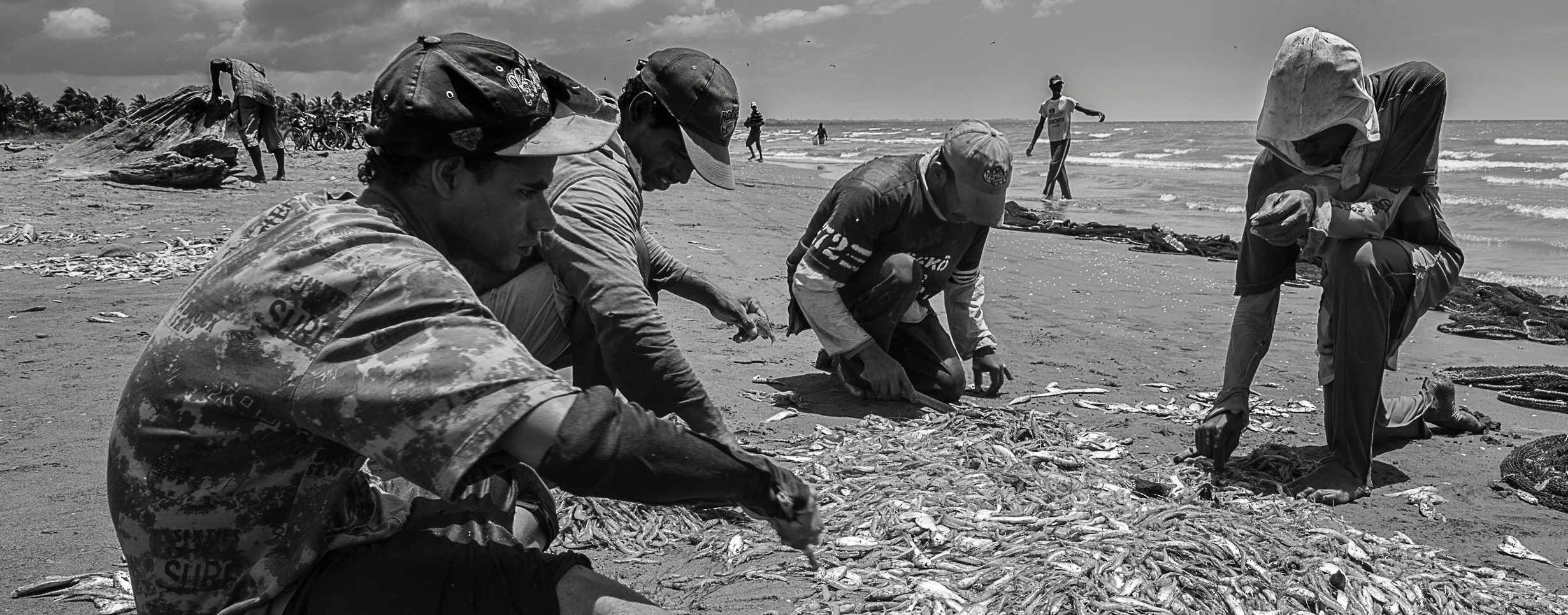
Man undoubtedly learned to fish. And how he learned… With a rod, a trammel net, gill net, creels, encircling nets, traps, dredging nets… The techniques used to catch fish are many and very effective, and thanks to them large number of people have found a means of subsistence for thousands of years.
The problem comes when these human populations are increasingly numerous and resources increasingly scarce. It is no longer about perfecting fishing techniques. The solution is not to go to the high seas and capture the last available specimens. It is necessary to find another alternative, one that provides us with food without depleting the ecosystem: a sustainable one.
Farming
So, if the objective is to feed a population of about 7,000 million people, the production model obviously cannot be that of the hunter “who goes out to the mountain to see what he finds”. The model has to be closer to that of the farmer, who invests resources now to ensure supplies in the future. That is where aquaculture plays a role.
Esteban Álvarez, responsible for the Aquaculture division of IMPULSO, sums it up in the following way: “In the 21st Century, we are still mere gatherers of what nature offers us. And we are seeing that this is not sustainable.”
Hunger
According to the United Nations Food and Agriculture Organization (FAO), there are 842 million people in the world today suffering from chronic hunger. Most of these people reside in Africa, in Asia, or in Latin America.
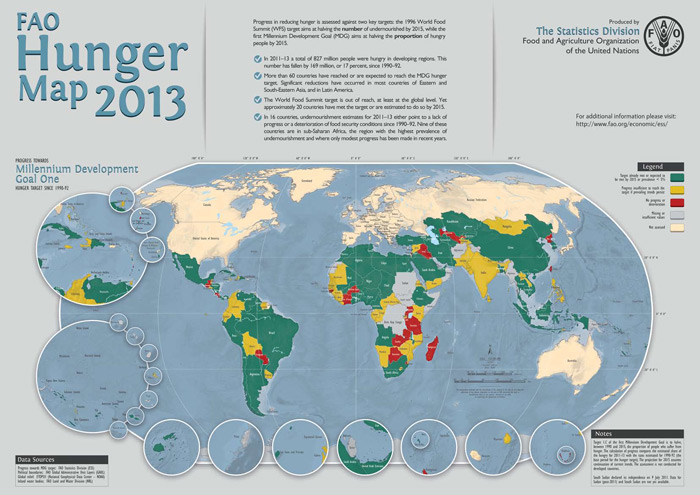
The solution suggested by the FAO report is that these people are capable of generating their own livelihood and, therefore, aquaculture farms, that is, places where fish are grown for human consumption, are the only alternative for producing high nutritional value protein and completing the minimum requirements recommended by the WHO, especially in those countries where the main source of nutrients comes from agricultural crops.
Industrial, social and environmental aquaculture
According to Esteban Álvarez, more than a distinction between freshwater aquaculture or saltwater aquaculture, it is of greater interest to differentiate between industrial, social and environmental aquaculture. Although the sustainability of any aquaculture farm depends on combining these three dimensions adequately, there are projects in which the industrial is more important, others in which the social aspect is prioritized and others oriented towards environmental actions.
The construction of a large aquaculture facility for farming salmon in Norway, for example, is a project in which the industrial vision prevails. Instead of this, according to Álvarez, IMPULSO is more interested in those projects in which the social component predominates. These are usually smaller projects than those above, but with a much greater scope and potential, since they are intertwined in communities that base their own survival on the success of the plant; their contribution to human and environmental development has a much greater value in the medium and long term. It means acting in the present to wager on the future.
The state of the art
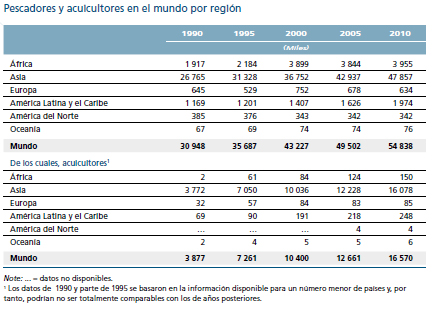
Although the origins of aquaculture seem to date back to 3,800 BC in ancient China, it is a practice that, interestingly enough, has not been developed until relatively recently. Fish farming was always considered a supplementary activity. For example, Álvarez tells us how the Romans, famous for their mastery of hydraulic systems, while building reservoirs and water pipes, threw fish in them that were used to supplement the troops’ diet. In this way they introduced different varieties of cyprinids in the Iberian Peninsula.
But it was not until the beginning of the 20th century that aquaculture began to be viewed from an industrial point of view. Mass farming would arrive in the late 80s and early 90s, when the industry needed to ensure a continuous flow of raw material for its optimal development and strove to stabilize production. Naturally species such as trout, salmon, sea bass, sea bream, or turbot were the first to be farmed, due to their high demand by consumers.
Very recently, in 2003, the aquaculture industry took a new direction, and aimed at expanding the diversity of farmed species. Until then, the biological cycle of barely a few dozen fish was known, and it took a significant investment in research and development to reach the approximately 600 species that can be successfully farmed today.
EPC Solutions
In this sense, Esteban Álvarez explains how IMPULSO combines all the tasks necessary for an aquaculture farm to function in its service offer. Under the EPC model (Engineering, Procurement and Construction) – also known as “turnkey” – IMPULSO acts as an integral provider; a provider whose work includes the analysis of water uses (in order to determine which area is more suitable for building the farm), obtaining financial aid or certification, the hiring and training of personnel, the viability plan, or the construction of the farm itself.
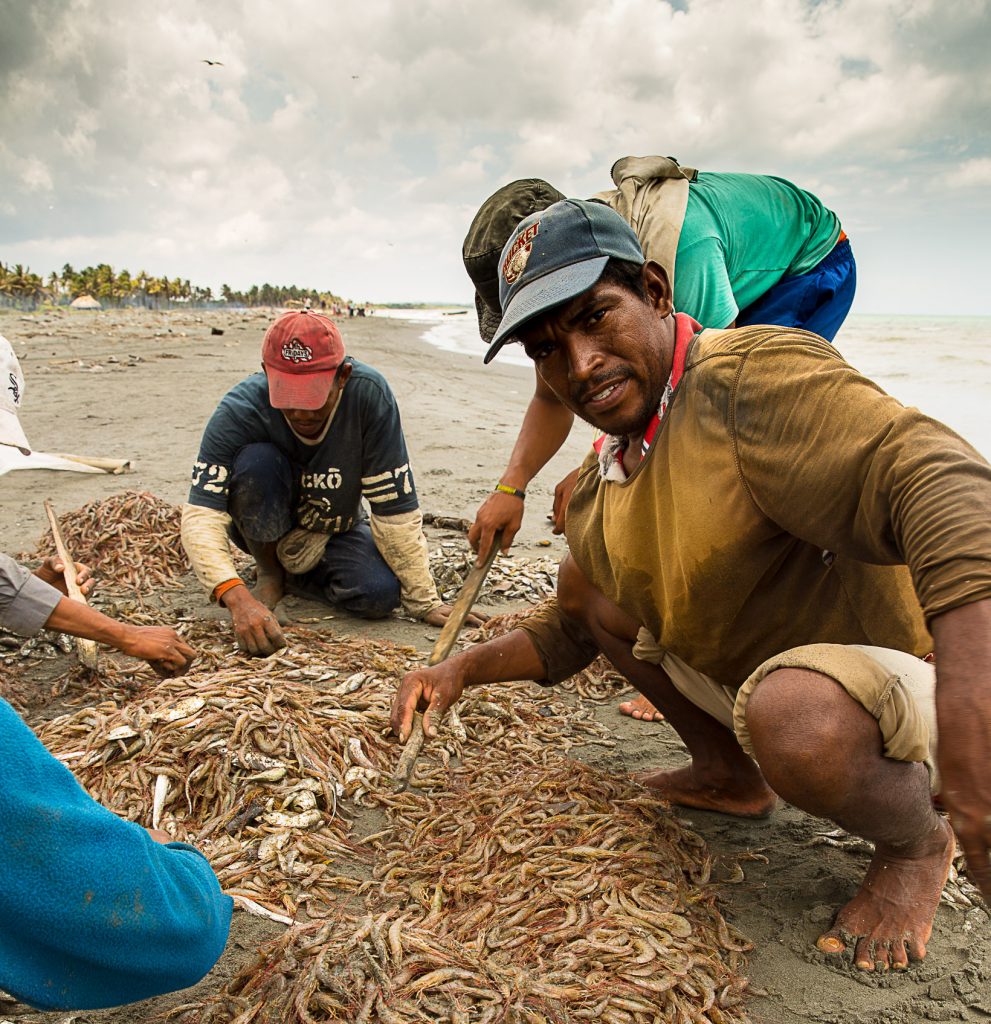
And he cites some examples: “We are completing the construction of a technological innovation park for shrimp farming in Colombia, where we will be able to carry out training and experiences on a real scale for new technologies in shrimp farming. It is a great progress in the medium term in a country that, for various reasons, has had little technological development.”
On the other hand, in the archipelago of San Andres and Providencia there is a Raízal community of traditional fishermen from whom the marine territory has been taken away for political reasons, and we are developing a marine fish farming project so that they can learn to grow the fish that they traditionally fished. We are also involved in other projects of plants for farming sole and tilapia, which is a fish much consumed in Africa.”
Water
But aquaculture, Esteban explains, can not be done at all costs either: “The activity has to be organized. It is not about making food anywhere, in any way and using any resources.”
Water is the most limited resource that mankind has and it has many uses. “Water is life,” he continues. “Often, we find water that comes with pathogens derived from human activity itself, or because the environment is contaminated. To deal with this we have developed a water recirculation system for large tonnage industry, in which the water, once used, is not released into the environment but first passes through mechanical filtration, biological filtration, disinfection, etc. so that it can be used again. It is a way to optimize a resource that is very scarce while greatly increasing productivity.”
This was addressed by Cristina Suárez, Head of Energy of IMPULSO and head of the RAS (Recirculating Aquaculture System) farm built in Ruiloba (Cantabria, Spain) as a pilot project:
“One of the main advantages of the water recirculation system we are developing is that it allows farms of marine species to be set up in places away from the coast. This is very beneficial, because we bring production within reach of inland populations and also we avoid the construction of farms on the coastline, which is often a natural reserve and is therefore protected.”
But this is not the only advantage -says Cristina- of the system being investigated and developed by IMPULSO – together with three universities (Valencia, Cantabria, Zaragoza) and several companies-. “The most important benefits are that the RAS farm significantly reduces energy consumption with respect to open-circuit farms, allows water quality to be improved and fish pathologies to be controlled and, of course, minimizes water consumption and discharges into the ecosystem.”
Life
So, taking everything into account, investing in aquaculture is investing in life. In human life, firstly, as the construction of a sufficient number of farms could end hunger and malnutrition, repeatedly denounced by both governmental and non-governmental institutions of all kinds.
Secondly, aquaculture represents an investment in the life of aquatic species – animals and plants – as the increase in demand for fish and modern trawling techniques are causing the rapid disappearance, or extinction, of both underwater fauna and flora.
And thirdly, aquaculture represents investing in the life of the planet itself, of this “blue planet” that we all share, since caring for water quality, regulating its uses and striving not to mistreat the liquid of which we are made is, more than an investment, a commitment.
“… Give him the fish, and teach him how to farm it sustainably. Only then will you feed his children.”
Link: FAO Report on the State of World Fisheries and Aquaculture 2012


03
Jul 2017
El agua y la vida
El agua y la vida.
Reportaje sobre la importancia de la acuicultura en el reto de la alimentación global.
“Regala un pescado a un hombre y le darás alimento para un día. Enséñale a pescar y lo alimentarás para el resto de su vida” (Proverbio chino)
“Enséñale a pescar y esquilmará los mares y los ríos, desarrollará técnicas para explotar las poblaciones naturales de peces, los suyos y los de sus vecinos, desembocando en conflictos internacionales, desigualdades sociales, la desaparición de especies de alto valor ecológico y un aumento progresivo de la pobreza. Dale el pez…” (Esteban Álvarez)
El hombre, indudablemente, aprendió a pescar. Y de qué manera… Con caña, con red de trasmallo, de agalle, con nasa, al cerco, con almadraba, mediante el arrastre… Las técnicas para capturar peces son muchas y muy efectivas y gracias a ellas, amplias poblaciones humanas han obtenido durante milenios una vía para la subsistencia.
El problema llega cuando esas poblaciones humanas cada vez son más numerosas y el recurso, en cambio, más escaso. No se trata ya de perfeccionar la técnica de pesca. La solución no pasa por adentrarse en alta mar y capturar los últimos ejemplares disponibles. Es preciso encontrar otra alternativa, una que nos proporcione alimento sin esquilmar el ecosistema: una sostenible.
Cultivar
Así que, si el objetivo es alimentar a una población de unos 7.000 millones de personas, el modelo productivo, obviamente, no puede ser el del cazador “que sale al monte a ver qué encuentra”. El modelo tiene que aproximarse en cambio al del ganadero, quien invierte unos recursos en el presente para asegurarse el abastecimiento en el futuro. Y ahí aparece la acuicultura.
Esteban Álvarez, responsable del área de Acuicultura de IMPULSO, lo resume de la siguiente manera: “En pleno siglo XXI, seguimos siendo meros recolectores de lo que la naturaleza nos ofrece. Y eso se está viendo que no es sostenible”.
Hambre
Según la Organización de las Naciones Unidas para la Alimentación y la Agricultura (FAO), en el mundo hay hoy 842 millones de personas aquejadas de hambre crónica. La mayor parte de estas personas residen en África, en Asia, o en América Latina.
La solución, como sugiere el informe de la FAO, pasa por que esas personas sean capaces de generar su propio sustento y por ello, las granjas acuícolas, es decir, los lugares donde se cultivan peces para el consumo humano, son la única alternativa para producir proteína de alto valor nutritivo y completar los requerimientos mínimos recomendados por la OMS, sobre todo en aquellos países donde la fuente principal de nutrientes proviene del cultivo agrícola.
Acuicultura industrial, social y medioambiental
Según Esteban Álvarez, más que una distinción entre acuicultura de agua dulce o acuicultura de agua salada, lo interesante es diferenciar entre acuicultura industrial, social y medioambiental. Si bien la sostenibilidad de cualquier granja acuícola depende de conjugar adecuadamente esas tres dimensiones, hay proyectos en los que prima más lo industrial, otros en los que se prioriza lo social y otros orientados a acciones medioambientales.
La construcción de una gran instalación acuícola en Noruega, por ejemplo, para el cultivo del salmón, es un proyecto en el que prevalece la visión industrial. Frente a esto, según Álvarez, a IMPULSO le interesan especialmente aquellos proyectos en los que prime la componente social. Son proyectos por lo general de menor tamaño que los anteriores, pero con un calado y un potencial mucho mayor, ya que se imbrican en comunidades que basan su propia supervivencia en el éxito de la planta; su contribución al desarrollo humano y medioambiental representa un valor mucho más alto a medio y largo plazo. Significa actuar en el presente como apuesta de futuro.
El estado del arte
Si bien los orígenes de la acuicultura parecen remontarse al año 3.800 a.C., en la antigua China, se trata de una práctica que, curiosamente, no se ha desarrollado hasta hace relativamente poco. Siempre se ha contemplado el cultivo de peces como algo suplementario. Por ejemplo, nos cuenta Álvarez cómo los romanos, famosos por su dominio de los sistemas hidráulicos, a la vez que construían embalses y canalizaciones de agua, arrojaban peces que se utilizaban para complementar la dieta de las tropas. Y así introdujeron diversas variedades de ciprínidos en la Península Ibérica.
Pero no fue hasta principios del siglo XX que se empezó a contemplar la acuicultura desde un punto de vista industrial. Los cultivos masivos llegarían a finales de los años 80, principios de los 90, cuando la industria requiere asegurar un flujo continuo de materia prima para su óptimo desarrollo y se esforzó por estabilizar la producción. Y lógicamente, las especies como la trucha, el salmón, la lubina, la dorada, o el rodaballo fueron las primeras en cultivarse, debido a su gran demanda por parte de los consumidores.
Muy recientemente, en el año 2003, la industria acuícola tomó un nuevo rumbo, encaminado a ampliar la diversidad de especies cultivadas. Hasta entonces, apenas se conocía el ciclo biológico de unas pocas decenas de peces, y fue necesaria una importante inversión en investigación y desarrollo para llegar a las aproximadamente 600 especies que se pueden cultivar con éxito hoy en día.
Soluciones EPC
En este sentido, Esteban Álvarez explica cómo IMPULSO aúna en su oferta de servicios todas las tareas necesarias para que una granja acuícola funcione. Bajo el modelo EPC (Engineering, Procurement and Construction) –también conocido como “llave en mano”- IMPULSO actúa como proveedor integral: un proveedor cuya labor comprende desde el análisis de los usos del agua (con el fin de determinar qué zona es la más adecuada para construir la granja), hasta la obtención de ayudas financieras o certificaciones, pasando por la contratación y formación de personal, el plan de viabilidad, o la propia construcción de la granja.
Y cita algunos ejemplos: “Estamos terminando la construcción de un parque de innovación tecnológica para el cultivo del langostino en Colombia, donde se va a poder realizar formación y experiencias a escala real para nuevas tecnologías en el cultivo de los langostinos. Es un gran progreso a medio plazo en un país que, por diversos motivos, ha tenido un escaso desarrollo tecnológico”.
Por otra parte tenemos, en el archipiélago de San Andrés y Providencia una comunidad raizal de pescadores artesanales a quienes, por cuestiones políticas, les han quitado territorio marino y estamos desarrollando un proyecto de piscicultura marina para que aprendan a cultivar los peces que tradicionalmente iban a pescar. Y también estamos en otros proyectos para plantas de lenguado, o de tilapia, que es un pez muy consumido en África”.
El agua
Pero la acuicultura, nos explica Esteban, tampoco puede hacerse a toda costa: “La actividad tiene que estar ordenada. No se trata de fabricar alimentos donde yo quiera, de la forma que yo quiera y utilizando los recursos que me dé la gana”.
El recurso más limitado que tiene el hombre es el agua y sus usos son múltiples. “El agua es la vida” –prosigue-. “A menudo, nos encontramos con aguas que vienen con patógenos, derivados de la propia actividad humana, o porque el medio está contaminado. Para ello, nosotros hemos desarrollado un sistema de recirculación de agua para industria de gran tonelaje, en el cual el agua, una vez utilizada, no se vierte al medioambiente, sino que pasa por una filtración mecánica, una biológica, una desinfección, etc, de forma que esa agua se pueda utilizar otra vez. Es una forma de optimizar un recurso que es muy escaso y asimismo poder aumentar mucho la productividad”.
Al respecto nos habla Cristina Suárez, Jefa de Energía de IMPULSO y principal responsable de la granja R.A.S. (Recirculating Aquaculture System) construida en Ruiloba (Cantabria, España) como proyecto piloto:
“Una de las principales ventajas del sistema de recirculación de agua que estamos desarrollando es que permite situar las granjas de especies marinas en lugares sin costa. Esto es muy beneficioso, porque ponemos la producción al alcance de las poblaciones del interior y además evitamos la construcción de las granjas en el litoral, que frecuentemente tiene la consideración de reserva natural y por lo tanto, está protegido”.
Pero ésta no es la única ventaja –comenta Cristina- del sistema que está investigando y desarrollando IMPULSO -junto con tres universidades (Valencia, Cantabria, Zaragoza) y varias empresas-. “Por citar los beneficios más importantes, diremos que la granja R.A.S. reduce significativamente el consumo energético con respecto a las granjas de circuito abierto; permite mejorar la calidad del agua y controlar las patologías de los peces; y por supuesto, minimiza el consumo de agua y los vertidos al ecosistema”.
La vida
De manera que, teniendo todo en cuenta, apostar por la acuicultura es apostar por la vida. Por la vida humana, en primer lugar, en tanto que la construcción del número suficiente de granjas podría acabar con el hambre y la malnutrición, denunciadas repetidamente por instituciones de todo tipo, tanto gubernamentales como no gubernamentales.
En segundo lugar, la acuicultura es una apuesta por la vida de las especies acuáticas –animales y vegetales-, ya que el aumento de la demanda de pescado y las modernas técnicas de arrastre están causando la rápida desaparición –la extinción- tanto de fauna como de flora subacuática.
Y en tercer lugar, la acuicultura es una apuesta por la vida del propio planeta, de este “planeta azul” que todos compartimos, puesto que cuidar la calidad del agua, regular sus usos y esforzarse en no abusar del líquido que nos compone es, más que apostar, comprometerse.
“… Dale el pez, y enséñale a cultivarlo de forma sostenible. Sólo así alimentarás a sus descendientes”.
Enlace: Informe de la FAO sobre el estado mundial de la pesca y la acuicultura 2012