European funds have failed brutally; accessing them is a true obstacle course
"Asturias needs competitive industrial land; it cannot be that a square meter here costs 100 euros and in León it costs 10"
In the second half of 2014, Brent crude oil plummeted, and the price per barrel depreciated by about 100 dollars in a few months. This struck at the heart of Angola’s economy, whose revenues depended 95% on black gold. In the African country, the Asturian company Impulso was awaiting payment of 10 million dollars for an engineering project. This put the company, founded in 1998 by Avelino Suárez, on the ropes. In 2016, still amidst financial turmoil, returning from a family gathering in Llanes, the entrepreneur told his son Jorge, who was already the firm’s CEO: “There’s only one thing missing from your profile: experiencing hardship. You learn a lot when you go through tough times.” A few days after that conversation, the founder passed away.
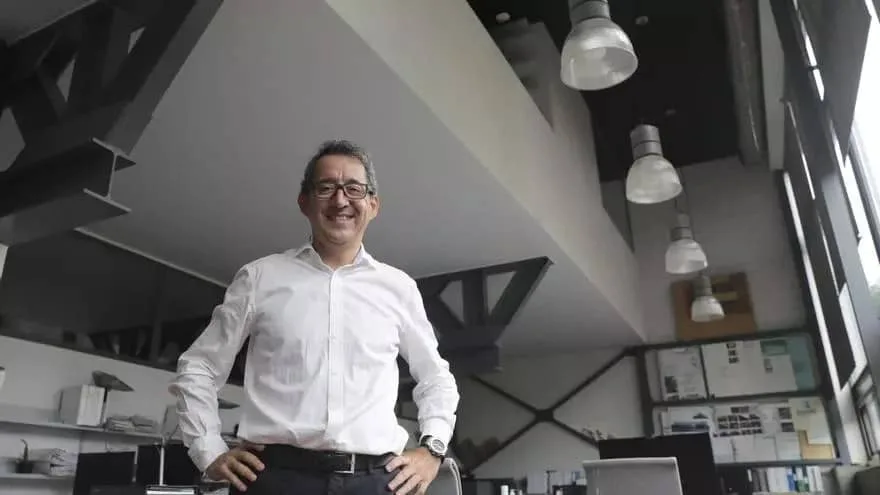
Jorge Suárez Díaz (Avilés, 1974) recalls this anecdote to illustrate his father’s vital and professional wisdom, as well as to savor the victorious feeling of having overcome that storm, which lasted several years and almost destroyed the family business. It was possibly a similar feeling to what father and son, along with his two other brothers, experienced so many times summiting the peaks of Asturias, as seen in several photographs in his office. An architect by training, Suárez leads Impulso, a company with three business lines: architecture (they have designed, for example, the headquarters of TSK and Duro Felguera), industrial engineering, and consulting for securing public funds. “Today we are doing great,” says Suárez, speaking with LA NUEVA ESPAÑA as part of the interview series, titled “The Relay,” which features new generations of Asturias’ main family businesses every two Sundays.
–Why does Impulso engage in such disparate activities as engineering and financial consulting?
–The origin lies in my father’s professional career; he was a technical mining engineer. After failing with a contracting company that worked with Ensidesa, at 33, he founded another company called Edin, dedicated to technical advice for mining operations. That went very well for him, and he soon saw that Asturian coal had two weaknesses: its high price and its low calorific value compared to Russian coal. Thermal power plants began buying Russian coal, so the State started subsidizing national mining activity to maintain it. That lasted until the closures of the 80s and 90s, and a lot of public funds began to arrive in Spain for the development of new economic activities. And that’s where my father made another transformation. When mining began to falter, many of my father’s mining clients called him for advice on accessing these funds and defining what new businesses they could undertake. So, in 1998, he created another company, called Impulso Industrial Alternativo, to meet that need. In Spain, he began to be considered a specialist in what is now called “public funding.” For six years, Edin and Impulso coexisted separately until the latter absorbed the former. The current organizational structure reflects that history.
–Currently, what are the business areas?
–Until my arrival, the company’s two pillars were those my father had started: engineering for industrial plants and consulting specializing in securing public funds, in which we are one of the national leaders. When I joined, we added the architecture division. At that time, my two brothers also joined: the eldest, Paulino, with a degree in Economics, who is the business development director; and the youngest, Juan Ramón, a technical mining engineer, who coordinates the geology and mining part.
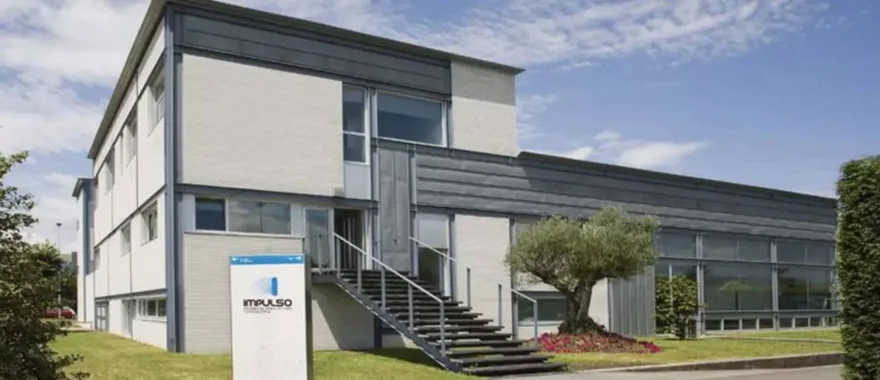
Impulso headquarters, in the Asturias Technology Park (Llanera). / LNE
The Company
Engineering, architecture, and consulting. Founded by Avelino Suárez (1947-2016), Impulso was established in 1998 after the merger of two companies previously created by the Llanera entrepreneur.
1,750 projects completed. This is the number of projects the Asturian firm has carried out since its founding 26 years ago.
2,500 square meters. This is the area of the company’s facilities in the Asturias Technology Park (Llanera).
75 employees. This is the company’s workforce. It is divided into three areas: engineering, architecture, and consulting.
11 million euros. This was the turnover in 2023. The company expects to achieve a similar figure in the current fiscal year.
–What was your career path before joining the company?
–In 2001, when I finished studying for a master’s degree at Columbia University (New York), my wife, who is also an architect, and I set up a studio in Asturias dedicated to creating virtual representations of third-party architectural projects. It went very well for us, but it didn’t last long, because technology transfer between countries is very fast, and soon that technology was widespread in Spain, so we stopped. Then I started working with my wife’s family, who are architects, until one day my father called me and asked why I didn’t join the family business. That would have been around 2003.
–Had he always wanted you to work with him?
–In our childhood and youth, he gave my brothers and me complete freedom to study whatever we wanted; he never pushed us in any direction. But once we were adults and had gained some experience in other companies, he did call us. And fortunately, there was room for all of us, because Impulso has several different activities.
–Is it difficult to work in a family business?
–It’s not easy. A family business is very appealing because you work with your own, but it also has a tiring aspect, because you spend your life talking about the company: at any moment, in any meeting… It’s as if there’s never a break. And being a family member within the company is also tough and even somewhat unfair, because there’s a higher level of demand. It’s as if you have to be exemplary at all times. Of course, leading by example is good practice, but it also creates tension.
Mountaineer, skier a nd reader of History and Science books
At 15, Jorge Suárez already knew he wanted to be an architect. He graduated from the Polytechnic University of Madrid (where he met his wife, Lucía) and later earned a master’s degree at Columbia (New York). The couple has two children: Antón, 17, and Manuela, 14. His hobbies include skiing (both in Spain and abroad); mountaineering, which he often practiced with his father until the latter’s death in 2016; reading, especially history books and biographies of scientists and inventors; and writing. He also loves to cook, and every year he prepares a Madrid-style stew for his friends.
–As specialists in the field, what problems do you detect in the processing of Next Generation European funds?
–The NextGen mechanism was flawed from the start and poorly explained. When it was created, a high-level explanation was given, stating that Spain would access 140 billion euros, split equally between grants and soft loans. It was said that it would be a windfall of money for companies over the next five years, and so on and so forth… The discourse stopped there. What happens is that the funds must be materialized into concrete programs with their rules and regulations. These programs were primarily focused on financing investments (a battery factory, a steel mill…), but no one explained, and I don’t know if intentionally or not, that the investments being financed were not conventional ones, as they are commonly understood.
–What is financed then?
–For example, if someone wants to set up a factory, that factory has a building and machines. But none of that is fundable under NextGen. The person is obliged to identify the sub-assemblies or components that introduce improvements in energy consumption or environmental impact compared to existing technologies. That is, in a cheese manufacturing process, it would be fundable, for example, if the refrigeration cycle of the curing line incorporates super-efficient technology. Well, none of this has been explained, and that has had consequences.
–What consequences?
–By simply announcing that there would be 140 billion for companies, the industry has huge expectations. And that leads to a retraction of investment, because they are waiting for those funds to arrive. And when these programs and calls are released, they are published late, with very little time to apply [one was released on August 15
that only gave two weeks’ notice, while half of Spain is on holiday], and they are literally an obstacle course. They are brutally complex and serve no purpose. So we thought: why did they do it this way? And, if you think about it, it makes sense that they did.
–Why?
–If a person had made a 100 million investment in 2020 to build a factory, and in 2021 a program appears that finances or subsidizes half of it, competitors emerge that destroy the economic fabric. If you can set up an industry for half the money, you wipe out the rest. It’s pure common sense. We believed this and explained it, and many people didn’t believe us. But our clients did. We don’t tell people what they want to hear, but what is. The NextGen funds have brutally failed because the truth about them has not been told. Even today, there are people who don’t know this is the case.
–In what aspects should Asturias improve for business prosperity
–To highlight one aspect, there is little competitive industrial land. A square meter in the Bobes industrial park or in Zalia costs 100 euros, while in Villadangos del Páramo (León), an hour away, it costs 10. Someone who needs a 500,000 square meter plot is not going to invest 50 million in land. It makes no sense. In other territories, the public administration grants 50-year loans to buy industrial land.
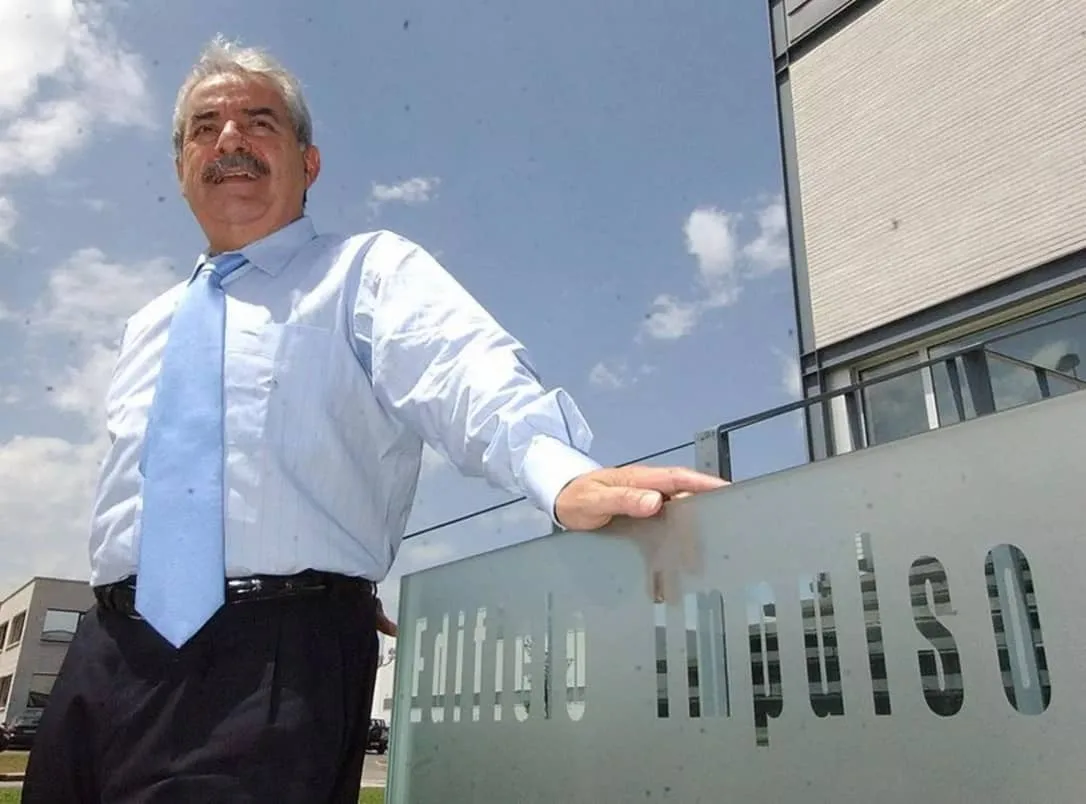 Avelino Suárez, during his time at the helm of Impulso. / LNE
The descendant o f miners who chose engineering and consulting
Great-grandson, grandson, son, and nephew of miners at the Minas de Villabona (Llanera) exploitation, Avelino Suárez Álvarez (1947-2016) started working at 17, while studying technical mining engineering at night in Mieres. Upon his father’s death, and being the eldest of three brothers, he had to help support his family. Among other jobs, he was a surveyor for Ferrovial. He moved with his family to Posada de Llanera, where his mother ran a haberdashery. At 26, Suárez founded a contracting and assembly company with several partners, which then worked with Ensidesa (now ArcelorMittal), and eventually had a thousand employees, but ended up closing due to labor problems. In 1980, at 33, he became definitively independent and began to undertake mining and industrial projects as a consultant. That was the genesis of Impulso.
Source: La Nueva España